
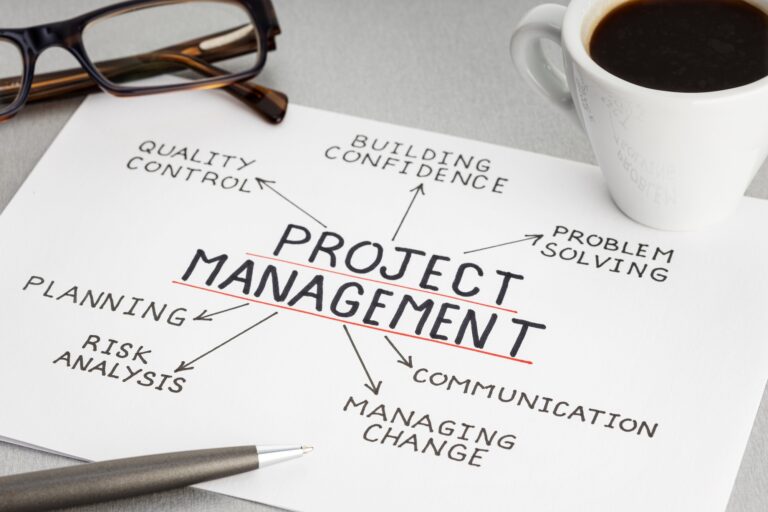
The Project Management in Healthcare course at Multi-Care School of Health Technology is meticulously designed to equip students with essential skills and knowledge tailored specifically for the healthcare sector. In today’s complex and ever-evolving healthcare environment, effective project management is crucial for improving patient outcomes, enhancing operational efficiency, and navigating the regulatory landscape.
1. Understanding Healthcare-Specific Project Management Principles:
Explore the unique challenges and demands that arise in healthcare project management.
Learn methodologies such as Agile, Waterfall, and Lean management as they apply to healthcare scenarios.
2. Planning Healthcare Projects:
– Gain skills in project initiation processes, including identifying stakeholders and defining project scope.
– Develop tools for creating effective project plans, timelines, and Gantt charts that align with healthcare goals.
3. Executing Healthcare Projects:
– Learn techniques for implementing project plans while managing teams within healthcare settings.
– Understand the significance of effective communication and leadership in orchestrating collaborative efforts among multidisciplinary teams.
4. Monitoring and Controlling Projects:
– Gain insights into essential performance indicators specific to healthcare projects.
– Master techniques for risk assessment, quality assurance, and change management to adapt to evolving project conditions.
5. Evaluating Project Success:
– Understand methodologies for assessing project outcomes against predefined success criteria.
– Learn how to conduct evaluations that incorporate patient and stakeholder feedback, using tools such as surveys and focus groups.
Budget Management and Resource Allocation
An integral component of this course focuses on financial literacy, crucial for the successful management of healthcare projects:
– Budget Management:
– Students will learn to create, manage, and adjust project budgets within healthcare organizations.
– Focus areas include understanding cost structures, ROI calculations, and the impact of financial decisions on patient care and organizational operations.
– Resource Allocation:
– Gain skills in effectively allocating resources—human, financial, and material—across multiple projects.
– Study case studies that emphasize the ethical considerations and strategic planning needed to optimize resource use while ensuring high-quality patient care.
Hands-On Learning Experience
– Case Studies: Students will analyze real-world projects from various healthcare settings, providing context and grounding theory in practical scenarios.
– Simulations: Engage in role-playing and project simulations that mimic real-life project management situations, enhancing decision-making skills and operational awareness.
– Collaborative Projects: Work in teams to propose comprehensive project plans, implementing learned methodologies and strategies, mimicking the collaborative nature of healthcare teams.